I recently had a friend ask for my advice on buying good coffee because she knows I’m a coffee nerd and she was “tired of buying things and being disappointed.”
Since I took the time to type it up for her, I figured I might as well share it here too.
If you haven’t gone down the coffee rabbit hole, and don’t really want to, but do feel like your coffee could be a little better, or even if you just wonder how some people can manage to drink their coffee black in the first place, this might be a good place to start.
I should also say that the following advice is only for people who are currently disappointed with their daily home coffee. If you like your coffee, keep on keeping on.
That being said, there are really only a few phases to improving your coffee:
- Buy good coffee
- Brew it well
There’s also a bonus third phase, but let’s start with the baby steps to accomplishing these first two goals.
1. Buying better coffee
~ ~ ~
FROM THE GROCERY STORE
If you’re shopping for coffee in a grocery store, the three main things to look for are:
- Freshness – look for a “Roasted on” date within the last month or two, if possible, NOT a “Sell by” or “Best by” date
- Whole bean – grind fresh before brewing if you can
- Lighter roasts – if you’re not happy with your current coffee, go one level lighter
FROM LITERALLY ANYWHERE ELSE
A better bet is to avoid the grocery store altogether. I had a subscription to Trade Coffee for a long time and I loved it. (Oh look, I still have an affiliate link). Trade is a service that ships freshly roasted coffee from roasters all over the country. The huge selection and variety makes it a great way to try different kinds of coffee and figure out what you actually like. There are several other similar services, but last I looked into it Trade seemed to have the widest variety.
Alternately, if there’s a local coffee shop that you like (ideally independent, i.e. not a chain—and bonus points if the shop is also the roaster), just buy beans off the shelf next time you’re there. It’ll almost always be fresher than the grocery store, you’ll be supporting local, and you can usually order it from the menu as a drip or pour over to see if you like it. Sometimes you even get a free coffee when you buy a bag, but your mileage may vary.
A NOTE ON COFFEE ROAST LEVEL
If you are going to make the switch from grocery store coffee to “specialty” coffee from a shop or a subscription service like Trade, it’s worth noting that the grocery store coffee will almost always be roasted darker than a coffee labelled with the same “roast level” from the specialty world.
2. Brewing better coffee
~ ~ ~
TURN OFF THE HOT PLATE
Other than buying good coffee, brewing makes a big difference too. If you are using a standard coffee pot with a hot plate, my main piece of advice is to turn the hot plate off immediately when it’s done brewing, even if that means turning off the whole machine. The longer the coffee sits on the hot plate, the harsher each subsequent cup will be.
Now, I realize I may be the only person in the world who has this opinion, but I think this last point applies to Ember mugs and other self-warming drinkware as well, although to a lesser degree.
UNTESTED ADVICE FOR KEURIGS
If you’re using a single-cup brewer like a Keurig, you won’t have to worry about the hot plate issue. I don’t have too many tips for the Keurig, but one trick I’ve come across for coffee pot machines which might also work for the Keurig is to load the machine with pre-heated water before brewing, supposedly this can help improve extraction. Also, I haven’t tested them, but I imagine you’ll have much better success with one of those reusable filter pods that you can fill with your own (fresh) coffee.
ABOUT GRINDERS
My friend also asked about grinders, she has a simple electric grinder and felt like the grinds weren’t very even.
When shopping for grinders the main thing you want to look for here is a burr grinder. If you have one of the spinning blade grinders, those will pretty much give you the most uneven grounds. I have two different (cheap) hand grinders from Hario, they’re not the best but at least they use burrs and are fairly easy to adjust grind size. There are plenty of options for both electric and manual burr grinders, they each have pros and cons and the price range varies wildly, but pretty much anything will be an upgrade from the electric spinny blade one.
TRY A NEW BREW METHOD
If you’ve never tried to manually brew your coffee, I’m not going to tell you to go out and buy a Chemex or V60 and learn to be a pour over pro. But it is worth noting that most manual coffee brewers are very cheap (that’s how I ended up with seven…)
But if you are looking for something very simple and accessible that will let you make coffee without your hot plate or Keurig, I suggest looking to either a French press or an Aeropress. They both give great coffee with as little work as pouring boiling water on top of ground coffee and waiting a few minutes. That’s pretty much it. Neither are very particular about the size or uniformity of your grounds either. The Aeropress is great for single servings while the French press can easily make 2-3 cups depending on the size you choose.
3. Paying more attention to your coffee
~ ~ ~
These next few tips are pretty intangible, but if you want to appreciate, or at least understand your coffee more, they really can make a difference:
Make your coffee prep into a ritual.
Take the time to slow down and drink your coffee while not doing too many other things.
Let your coffee cool down a little so you can actually taste it.
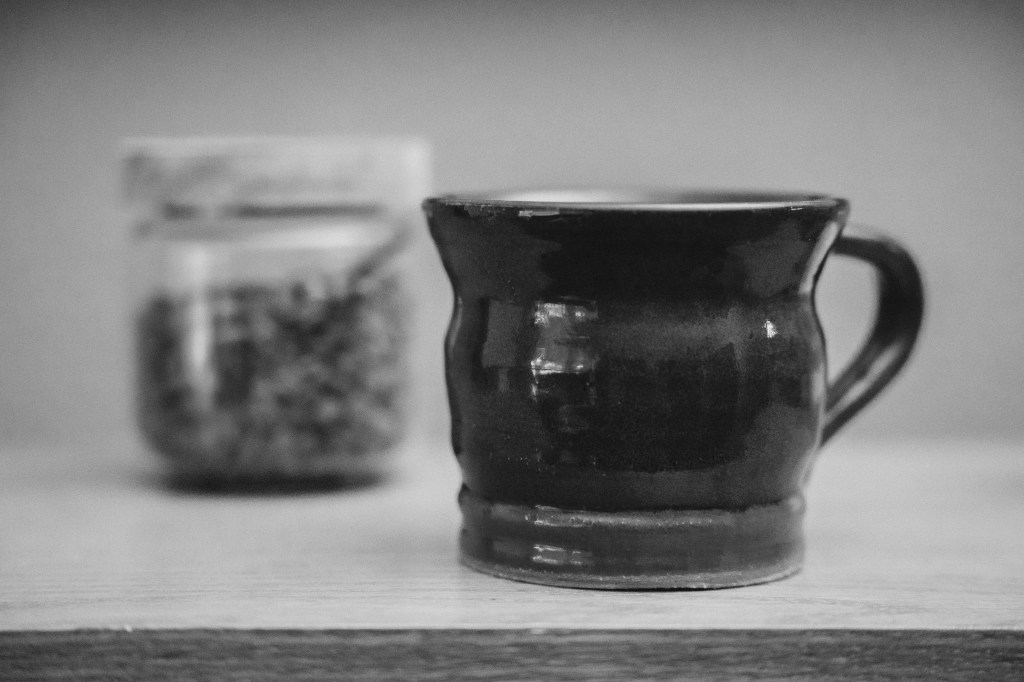
Get a nice coffee mug that feels aesthetically significant to you. Handcrafted, minimal, demitasse, old diner style. Whatever you like, just make it something unique.
Avoid using your daily thermos, which we all know has been irreversibly seasoned with the taste of coffees past . . .
~ ~ ~
It’s important to keep in mind that each of these three phases are interconnected.
If you buy good coffee and brew it poorly, you might only see marginal improvement. And vice versa. And no matter how good your beans or brew are, you won’t really appreciate it or understand why you like what you like if you don’t find ways to pay attention to it.
There’s a lot more to say about good coffee, but if you’ve never done anything at all to try and improve your daily coffee experience, hopefully this will give you a place to start.